
Computational Approach
We use computational models and simulations to investigate the physical principles governing the structure, dynamics, and function of complex macromolecular systems.
Multidisciplinary knowledge
We integrate concepts and tools from physics, biology, and computer science to unravel the complexities of macromolecular systems..
Benefits and Applications
Our research provides fundamental insights into biological processes, paving the way for advancements in drug discovery, enzyme engineering, and biosensing technologies.
Physics of Macomolecular Complex
Research Group Overview
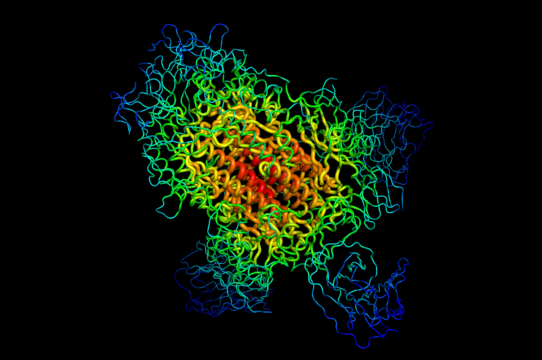
Our research group at the University of Paris-Saclay focuses on studying the physical properties of complex macromolecular systems, particularly enzymes and proteins. We aim to understand their fundamental functions using tools and concepts from condensed matter physics. Our work involves developing theoretical models and computational tools to investigate these biological systems, with the ultimate goal of fostering multidisciplinary collaborations.
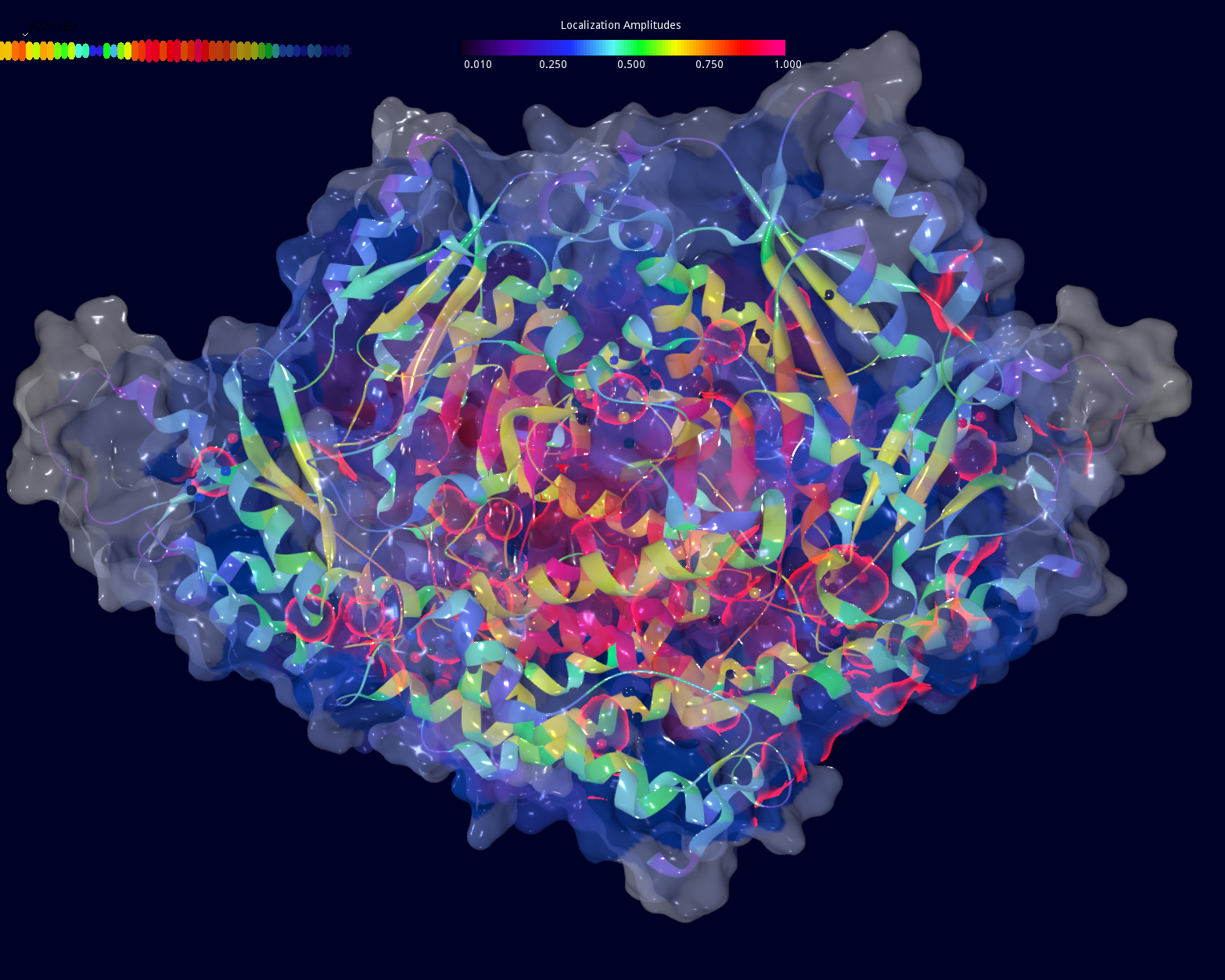
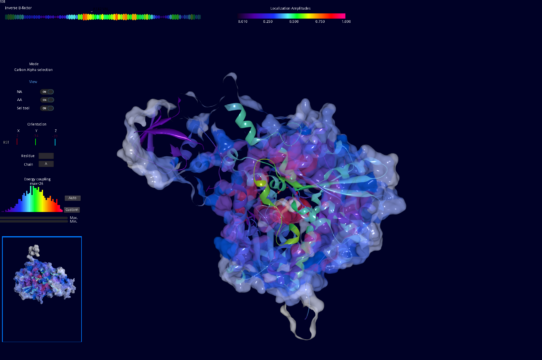
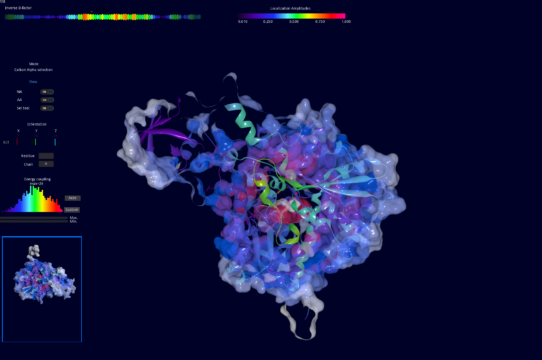
e.g. Wave localization Landscape in a Glutamate decarboxylase
protein
Main Research Topics
Rate-Promoting Vibrations in Enzymes
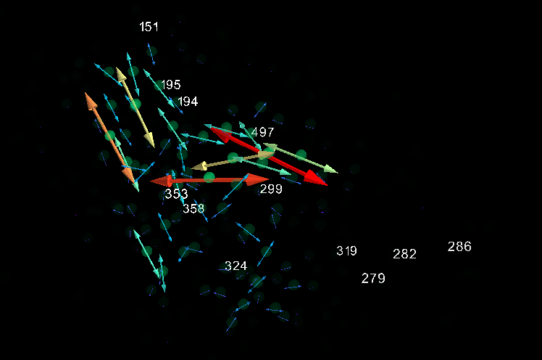
We investigate how localized vibrations, known as rate-promoting vibrations (RPVs), enhance the catalytic efficiency of enzymes. These vibrations are typically found in the stiffest parts of the enzyme scaffold and are crucial for facilitating rapid chemical reactions at the active sites. By studying the localization of these phonons, we aim to understand how evolution has optimized enzyme structures for efficient catalysis. This research provides insights into the physical mechanisms that underlie enzyme function and offers strategies for engineering enzymes with improved catalytic rates.
Key points :
Wave Approach and Localization Theory: Phonon Localization: Understanding how localized vibrations assist in catalysis.
Evolutionary Optimization: Exploring how enzyme structures have evolved to enhance catalytic efficiency.
Engineering Applications: Proposing methods to engineer enzymes for better performance.
Macromolecular Communication, Information Transport and Allosteric Control
Our research delves into the mechanisms of information transport and allosteric communication within proteins, using energy transport in disordered phonon systems as a model. Specifically, we study systems like the CGPR membrane receptor to understand how energy is transmitted across different parts of a protein, facilitating long-range communication and functional regulation. This involves analyzing the dynamic cross-correlations between residues and identifying key pathways for allosteric signaling.
Key Points:
Energy Transport: Investigating how energy moves through disordered phonon systems in proteins.
Allosteric Intramolecular Communication: Understanding how distant parts of a protein communicate to regulate function.
Protein-Protein Interfaces
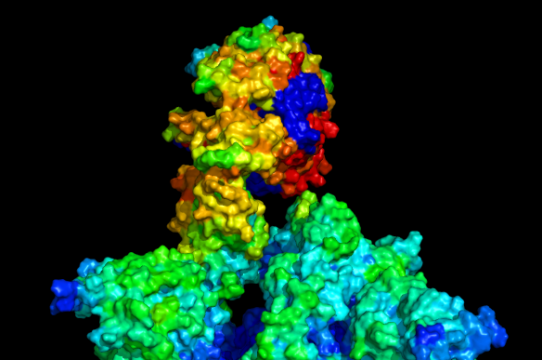
We explore the role of protein-protein interfaces in facilitating intramolecular communication, which is essential for allosteric regulation. By studying systems such as the SARS-CoV-2 spike protein, we aim to understand how interactions at these interfaces enable proteins to transmit signals and undergo conformational changes. This research helps elucidate the mechanisms of allosteric regulation and the functional dynamics of protein complexes.
Key Points:
Interface Dynamics: Examining how protein-protein interfaces contribute to communication within proteins.
Allosteric Regulation: Understanding the mechanisms of signal transmission and conformational changes.
Case Studies: Analyzing specific systems like the SARS-CoV-2 spike protein to uncover general principles.
Numerical Fingerprint of DNA Topology for Epigenetic Studies of Cancer Cells
The three-dimensional structure and topology of DNA are crucial for regulating gene expression and cellular processes, with aberrant DNA topology implicated in diseases like cancer. Current techniques lack the resolution and quantitative capability needed for comprehensive genome-wide analysis. We propose using the Photochemical Analysis of Structural Transitions (PhAST) technique, developed by Malcolm Buckle Termes, to investigate DNA topology in complete cell genomes and define a numerical fingerprint of the epigenetic state in tumor cells. PhAST employs UV-induced pyrimidine dimer formation to probe local DNA structure, enabling single-base resolution analysis.
Key Points :
Toward personalized therapies : By comparing DNA topological profiles of tumor and normal cells, we aim to identify characteristic topological signatures associated with cancer’s epigenetic state. This approach could reveal new insights into tumorigenesis and provide powerful tools for cancer diagnosis and therapy.
Generic Fingerprint databases : Our research integrates PhAST with bioinformatics and molecular biology to comprehensively understand DNA topology’s role in epigenetic regulation, potentially leading to novel diagnostic and therapeutic strategies.

Research Approach
Our approach integrates tools and concepts from condensed matter physics to investigate the fundamental functions of proteins and enzymes. We develop theoretical models and computational tools to simulate and analyze these complex systems. This interdisciplinary methodology not only advances our understanding of biological macromolecules but also aims to initiate collaborations across various scientific disciplines, including biophysics, computational biology, and materials science. By bridging these fields, we strive to uncover new insights and foster innovative research directions.
Expanding the Scope of Biological Systems
Our research group at the University of Paris-Saclay is constantly pushing the boundaries of our understanding of complex biological systems. While our core focus remains on enzymes and specific proteins, we are actively expanding our research scope to encompass a wider range of macromolecules. This includes investigating the intricate workings of membrane proteins, delving into the dynamic world of nucleic acids, and exploring the fascinating relationship between structure and function in intrinsically disordered proteins.
Developing Novel Experimental Collaborations
Recognizing the importance of experimental validation and seeking new research avenues, we are actively forging collaborations with leading experimental groups. These collaborations leverage cutting-edge techniques such as single-molecule studies to observe individual molecular dynamics, spectroscopic methods to probe real-time changes in conformation and energy transfer, and structural biology approaches to complement our computational models with high-resolution structural data.
Applying Findings to Real-World Problems
Driven by the potential real-world impact of our research, we are actively exploring applications in diverse fields. This includes contributing to the development of novel drugs by targeting rate-promoting vibrations or allosteric sites, advancing enzyme engineering by designing more efficient enzymes for industrial applications based on our understanding of catalytic mechanisms, and pushing the boundaries of biosensing by harnessing the principles of allosteric communication and protein-protein interactions.
Disseminating Research
We believe that effective dissemination of our research findings is crucial for advancing scientific knowledge and fostering collaboration. We are committed to publishing our work in high-impact journals, presenting at international conferences, and engaging with the public through accessible and engaging communication strategies. This multifaceted approach ensures that our research reaches a broad audience and contributes to a deeper understanding of the fascinating world of biophysics.
Structure, Properties and Modeling of Solids Lab. Ecole Centralesupelec
Current research projects
Here are some on going research project
Investigating HER2 Breast Cancer Tumor Drug Resistance Using DNA Topological numerical fingerprint
Phonon Assisted Proton Transport in Hydrogenase for H2 clean Energy production
Deciphering Intramolecular Communication in SARS-CoV-2 Spike Protein – ACE2 Receptor Interaction:
This project aims to unravel the detailed molecular events that occur when the SARS-CoV-2 spike protein binds to the human ACE2 receptor, a crucial step in viral infection. We are currently working in Spike-ACE2 Interaction. The interaction between the spike protein on the virus surface and the ACE2 receptor on human cells triggers a cascade of events leading to viral entry. Our research focuses on mapping the specific conformational changes and energy transfers that occur within both the spike protein and ACE2 receptor upon binding. This includes: Allosteric effects: How binding at one site influences the structure and dynamics of distant sites within the proteins. Identifying the key amino acid residues and domains involved in transmitting signals from the binding interface to other parts of the proteins, ultimately leading to membrane fusion and viral entry.
.
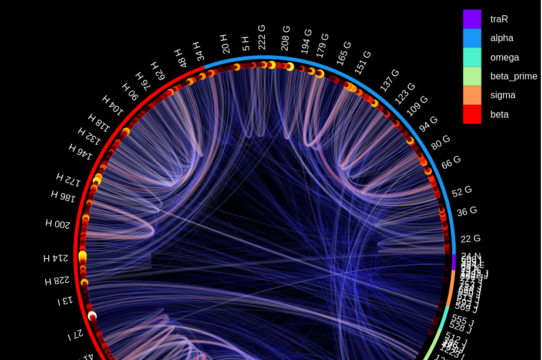
Unveiling the Energetics of DNA-RNA Polymerase Interaction During Transcription Initiation:
This project investigates the energy exchange between DNA and RNA polymerase during the initiation of transcription, a critical step in gene expression. This process involves RNA polymerase binding to a specific DNA sequence (promoter), unwinding the DNA double helix to form a transcription bubble, and initiating RNA synthesis. Our research focuses on understanding the energy landscape of this complex process. This involves: Determining the energetic cost of breaking the hydrogen bonds holding the DNA strands together, analyzing the energy changes associated with conformational shifts in both RNA polymerase and DNA during bubble formation and how this trigger conformational changes though allosteric communication in the complex
Contact us : contact@biodelya.com
contact@biodelya.com