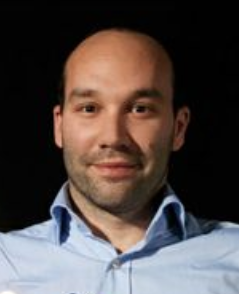
Yann Chalopin (Ph.D., M.S., Eng.)
Yann Chalopin, Ph.D., is a CNRS research scientist at Ecole CentraleSupelec, where he leads a research group focused on the theoretical aspects of molecular physics physical biology of complex systems. His work aims to develop a fundamental understanding of the functional dynamics of macromolecular complexes, particularly enzymes and proteins, by applying principles from condensed matter physics. Dr. Chalopin's academic journey began at Ecole Centrale Paris, where he obtained his M.S. in Solid State Physics in 2006 under the supervision of Prof. J.J. Greffet. He continued his doctoral studies at the same institution, earning a Ph.D. in 2009 with a dissertation on nanoscale energy transport and near-field optics. Following his doctoral studies, Dr. Chalopin pursued postdoctoral research at the Massachusetts Institute of Technology (MIT) from 2009 to 2010, collaborating with Prof. Gang Chen's group. This experience broadened his expertise in the field of energy transport at the nanoscale and laid the foundation for his current research interests. Dr. Chalopin's research group at Ecole CentraleSupelec employs a multidisciplinary approach, integrating concepts from condensed matter physics, biophysics, and computational biology. They develop theoretical models and computational tools to investigate the intricate mechanisms governing the structure, dynamics, and function of complex biological macromolecules. Specific areas of focus include: Through his research, Dr. Chalopin aims to uncover fundamental principles governing the behavior of complex biological systems and contribute to the development of novel strategies for understanding and engineering enzyme function, allosteric regulation, and protein-based therapeutics.
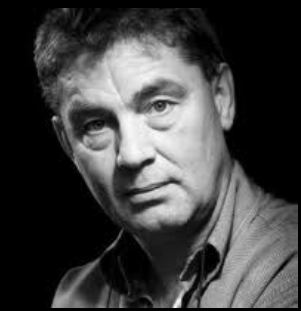
Malcolm Buckle (Ph.D)
Malcolm Buckle is currently a Director of Research in the CNRS in France and was director of a fundamental biology research laboratory (LBPA) at the Ecole Normale Supérieure Paris-Saclay from 2011 to the end of 2019. Following a PhD in Solid Phase Peptide Synthesis with Roger Epton at Wolverhampton Polytechnic in the UK (1980), he held a series of post-doctoral positions in Canada, Italy and France and finally became a senior scientist at the CNRS working with Dr Henri Buc at the Pasteur Institute Paris. After moving to the ENS Cachan, in 2002 he directed a group working on the control and regulation of transcription. Although his research interests have covered a fairly broad spectrum ranging from solid phase peptide synthesis through bioenergetics to the control of gene expression, he has always been struck by the necessity of developing techniques that allow time-resolved analysis of dynamic systems. This has led to the development and use of rapid high-energy UV lasers to follow the photo-reactivity of DNA involved in nucleoprotein complexes leading culminating in the PhAST (Photochemical Analysis of Structural Transitions) technique. Malcolm was an early user of emerging technologies based on Surface Plasmon Resonance (SPRi) and quickly realised that these techniques were severely limited by problems associated with the interface between a surface-based biosensor surface (a biochip) and macromolecules in solution. His group developed a unique surface chemistry with a wide range of applications ranging from biosensor surfaces to nanoparticles with tremendous potential for use in diagnostic assays. Malcolm was recently involved in a maturation phase for valorisation of this chemistry with the aim of creating a start-up company. Current research is focused on the dynamics of nucleoprotein complexes, specifically nucleosomes, and increasingly the role of order/disorder transitions in proteins and their role in protein structure/function related to evolution and disease, again from a dynamic point of view.
Elouan Bethuel (Ph.D Candidate)
Elouan Bethuel is a Ph.D. candidate in the research group led by Dr. Yann Chalopin at Ecole CentraleSupelec. His research focuses on developing computational methods for analyzing high-throughput sequencing data to map DNA chemical modifications and study epigenetic regulation. Elouan holds a double-discipline Bachelor's degree from Sorbonne University, where he gained a strong foundation in bioinformatics, genomics, and molecular dynamics. He further honed his skills in signal processing, machine learning, and programming during his Master's in Bioinformatics at the University of Paris-Cité. Prior to his doctoral studies, Elouan completed a 2-year work-study program at the UMR Epigenetics and Cell Fate laboratory under the supervision of Dr. Magali Hennion. During this apprenticeship, he developed an automated pipeline enabling biologists to analyze high-throughput sequencing data for mapping DNA chemical modifications, demonstrating his expertise in epigenomics and computational biology. Elouan's multidisciplinary background and experience in epigenetics, genomics, and bioinformatics make him a valuable asset to the research group. His doctoral research aims to advance the understanding of epigenetic regulation by developing innovative computational approaches for analyzing and interpreting high-throughput sequencing data related to DNA chemical modifications.